

A friends-with-benefits arrangement can mean different things to different people. Among consenting adults, it may involve friendship and sexual intimacy without an agreement to be romantic partners. The label does not settle questions about exclusivity, contact, care or what happens if someone’s wishes change.
You can discuss those questions without promising that nobody will become attached or disappointed. A useful agreement leaves room for honest answers, ongoing consent and either person deciding that the arrangement no longer works for them.
On this page
Consider what you want
Ask whether a casual arrangement is something you want now, rather than a way to stay close while waiting for the other person to choose a committed relationship. If you know you want exclusivity or a romantic partnership, that preference deserves an honest conversation.
Think about what would make the arrangement workable in everyday life. You might enjoy occasional intimacy while wanting separate routines, or value a friendship that also includes ordinary social time. There is no requirement to stop having coffee together or to prohibit affection simply because the connection is casual.
You can also decline. Being interested in someone does not mean every available arrangement will suit you. Taking time to decide, or choosing friendship without sex, is a reasonable answer.

Define the arrangement together
Discuss expectations before relying on them. “What does friends with benefits mean to you?” can open a conversation about what each person wants and what they are offering. Avoid agreeing to vague terms because you are worried that asking questions will make you seem demanding.
Useful topics include:
- Whether either person is dating or having sex with other people, and which changes need to be discussed.
- How you will arrange contact and respond when someone is unavailable.
- Whether sleepovers, affection and social plans are welcome to both of you.
- What you want kept private, including photos, messages and details shared with friends.
Do not assume that “casual” automatically means nonexclusive, always available or free of responsibility. You still need to respect agreed plans, protect privacy and consider how your choices affect the other person. If you cannot agree on an important condition, you can choose not to continue.
Discuss consent and sexual health
An ongoing arrangement is not ongoing permission for every sexual activity. RAINN’s guidance on consent explains that agreement must be freely given and can be withdrawn. Past intimacy, flirting or staying overnight does not replace a present choice.
Ask about comfort, listen to the answer and stop if consent is unclear or withdrawn. You do not need to try an unfamiliar activity to be a good casual partner, and you do not owe sex because the other person travelled, paid for something or expected it.
Before sexual contact, discuss barriers, STI testing and contraception where pregnancy is possible. The CDC’s overview of condom use explains that correct, consistent use reduces risks without providing absolute protection. A sexual-health professional can help you consider testing and prevention choices for your circumstances.
If you cannot discuss these matters without pressure, ridicule or fear, pause the arrangement. A casual label does not make coercion acceptable. Seek private support if you are worried about retaliation or something happened without your consent.
Check in about changing feelings
Choose opportunities to ask whether the arrangement still fits. You might check in after a change in contact, before another sexual encounter or when one of you starts dating someone else. The aim is useful information, rather than a test of who is more detached.
Feelings can change even when agreements have been followed. Affection, jealousy, disappointment or a wish for commitment are experiences you can acknowledge; they do not automatically establish a right to control the other person. Discuss what you want to do in response.
You could say, “I’m finding that I want a relationship, and continuing this arrangement is difficult for me. Is a relationship something you want?” Listen to the answer without treating more patience or better sex as a way to secure a different one.
End or change the arrangement respectfully
Either person can stop sexual contact or end the arrangement. Where it is safe, make the change clear: “I don’t want to continue the sexual part of our friendship.” You do not need to prove that the other person did something wrong.
If you want to remain friends, discuss whether some time apart would help and what contact each person welcomes. Neither person has to promise immediate friendship to soften disappointment. Keep private messages and images private after the arrangement ends.
Clear agreements can help you make informed choices, but they cannot prevent every difficult feeling. You can change your mind, ask for care and choose a relationship arrangement that makes room for your needs.
Revisit the arrangement when one person wants more
If a casual arrangement has started to feel emotionally important, describe what you want before making more plans. You might say, “I’d like to talk about whether we both want to keep doing this. My feelings have changed.”
The other person can have a different answer. You can ask for a break, decide how to spend time as friends or end the sexual arrangement. Consent applies each time, including if a conversation has gone well.
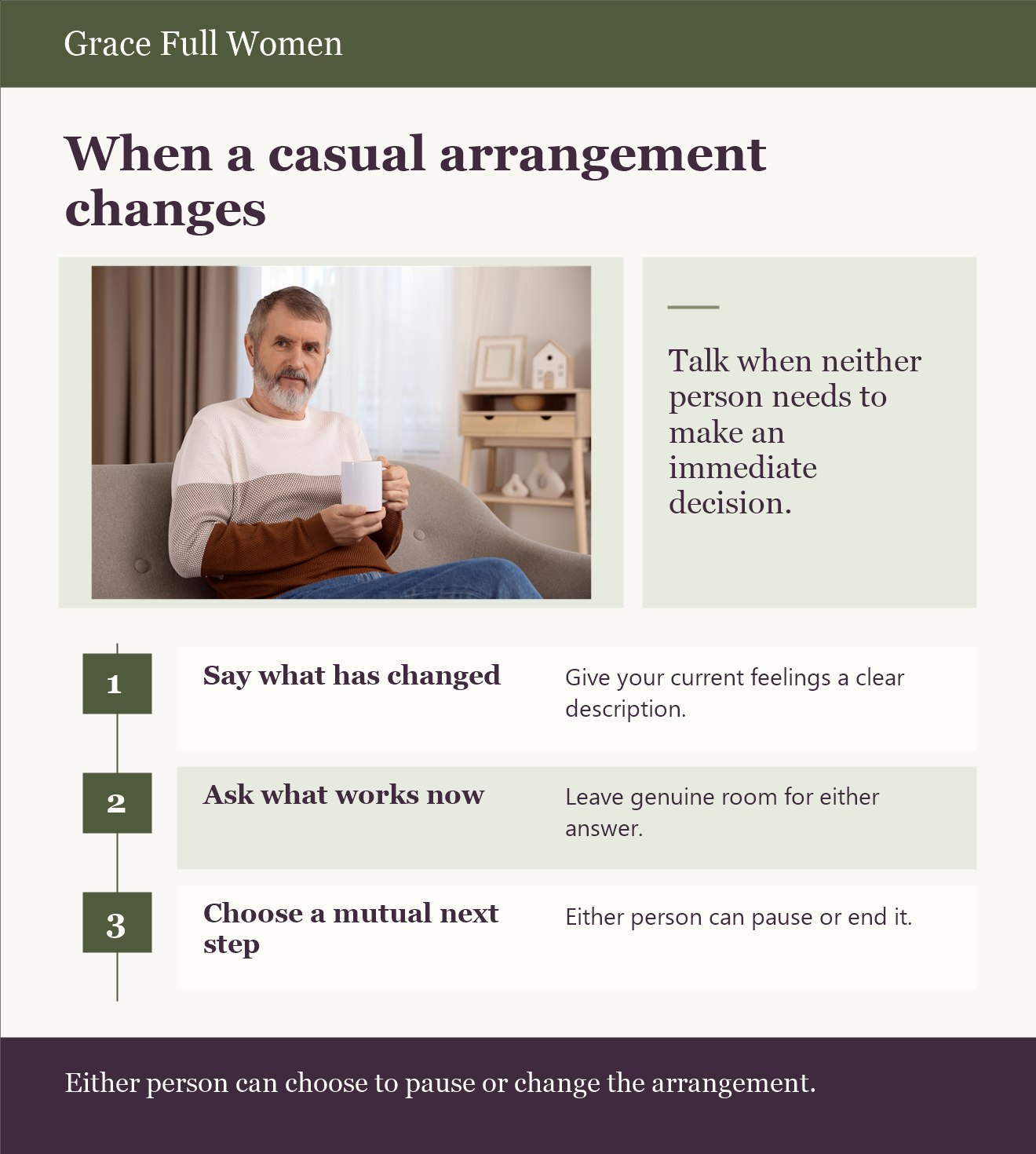
Read the infographic in text
When a casual arrangement changes
Talk when neither person needs to make an immediate decision.
- Say what has changed Give your current feelings a clear description.
- Ask what works now Leave genuine room for either answer.
- Choose a mutual next step Either person can pause or end it.
Either person can choose to pause or change the arrangement.